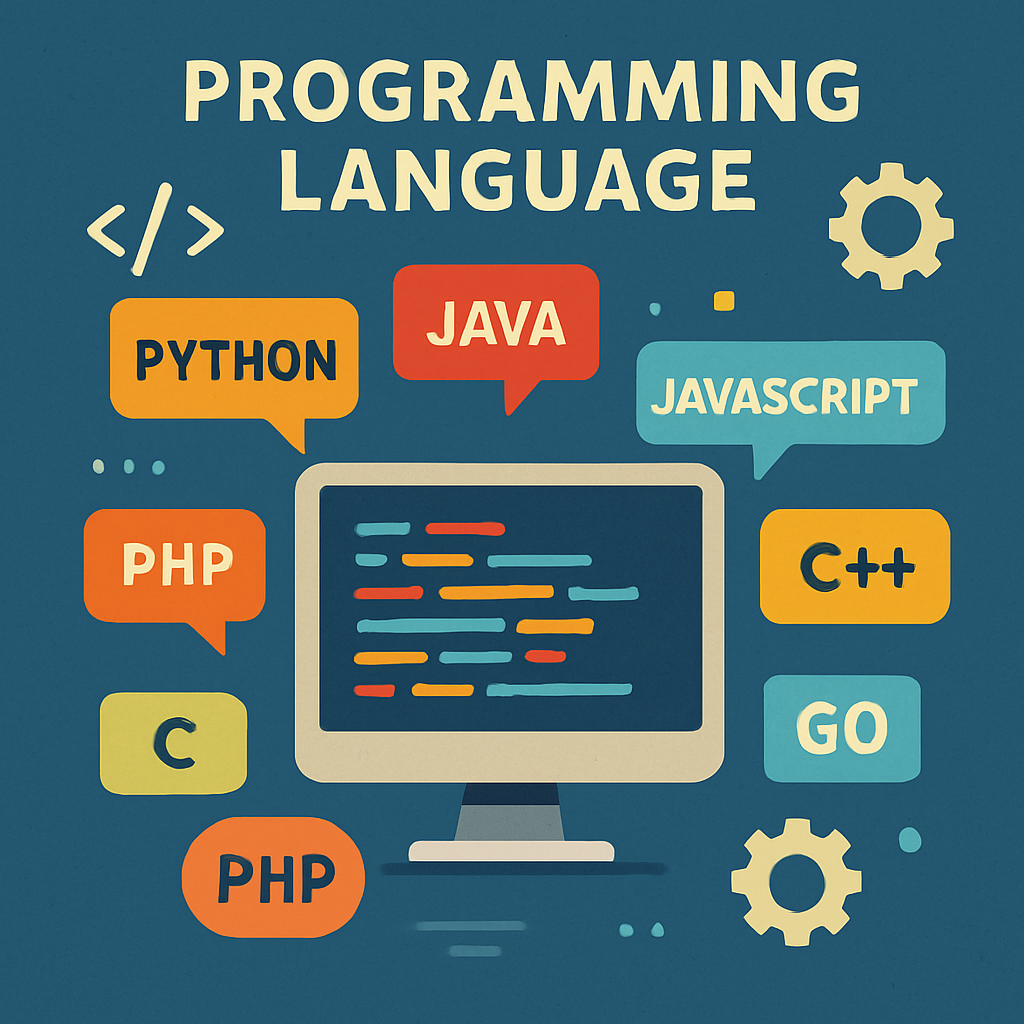
best programming language to learn for Your Career in 2025
Discover the best programming language to learn in 2025 to boost your tech career, stay in demand, and land high-paying jobs in software development.
Introduction
“The best programming language is the one that gets the job done—and gets you hired.”
Whether you’re a beginner looking to break into tech or an experienced developer planning your next big move, choosing the right programming language is one of the most crucial career decisions you’ll make. But with so many options out there, how do you decide which language is worth your time and energy?
Let’s break it down with a smart, strategic guide that will help you make the best choice based on your goals, interests, and market demand.
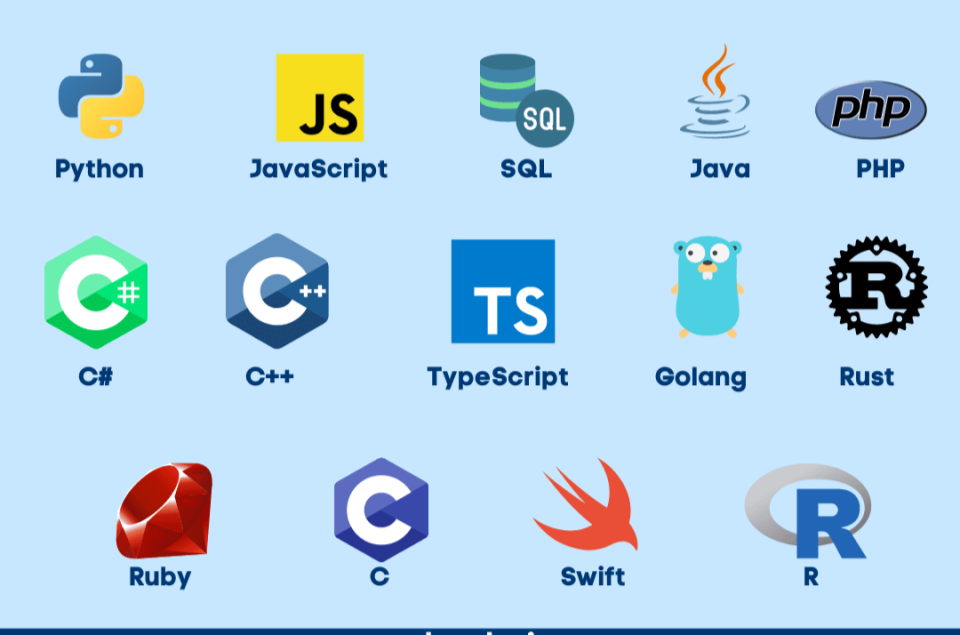
📌 1. Understand best programming language Your Career Goals
![Image suggestion: A roadmap with various destinations labeled “Web Developer,” “Mobile Developer,” “AI Specialist,” etc.]
The “best” language isn’t one-size-fits-all—it depends on what kind of career you want. Ask yourself:
- Do you want to build websites?
- Are you excited about AI and machine learning?
- Dreaming of mobile apps?
- Passionate about cybersecurity?
- Interested in game development?
Here’s a quick guide:
| Career Path | Recommended Languages |
|---|---|
| Web Development | JavaScript, HTML/CSS, Python |
| Data Science/AI | Python, R, Julia |
| Mobile App Development | Kotlin, Swift, Dart (Flutter) |
| Game Development | C++, C#, Lua |
| Systems Programming | C, Rust |
| Cloud/DevOps | Go, Python, Bash |
🌍 2. Follow the Market Demand
It’s always smart to check job trends and salary data. The most widely used and in-demand languages tend to offer more job opportunities and community support.
💡 Pro Tip:
Check job boards like LinkedIn, Indeed, and Stack Overflow to see which languages are frequently mentioned in job posts in your desired field or city.
best programming language 2025:
- Python – Versatile, beginner-friendly, and dominant in data science.
- JavaScript – Core to web development, supported by all browsers.
- Java – Used in enterprise software and Android apps.
- C# – Great for game dev (Unity) and Microsoft platforms.
- Go (Golang) – Gaining traction in cloud, DevOps, and high-performance apps.
🧠 3. Consider the Learning Curve
Some languages are easier to learn than others. If you’re new to programming, it’s smart to start with a language that has:
- Simple syntax
- Strong community support
- Tons of tutorials and documentation
Easy to learn:
- Python
- JavaScript
- Ruby
Moderate:
- Java
- C#
- Kotlin
Challenging (but powerful):
- C++
- Rust
- Haskell
If your goal is speed-to-job, start with an easier language. If you’re in it for the long haul or want to build complex systems, go with the tougher ones.
🧩 4. Look at Ecosystem & Tools
The language is just part of the story. Look at the ecosystem around it:
- Are there good libraries or frameworks?
- Does it have strong IDE support?
- Are there active communities and regular updates?
Examples:
- JavaScript has React, Node.js, and a huge package ecosystem.
- Python shines in AI/ML with TensorFlow, PyTorch, and Pandas.
- Rust has a growing but smaller ecosystem—great for performance-focused projects.
👥 5. Tap into the Community
A strong community can make your journey so much smoother.
Look for:
- Active forums (Reddit, Stack Overflow)
- Open-source contributions
- Meetups or online communities
This support network can be a game-changer when you hit roadblocks—or just need some career advice.
💼 6. Think About Longevity
The tech world moves fast, but some languages stand the test of time. Before you dive deep, ask:
- Has this language been stable and maintained?
- Is it growing or declining in popularity?
- Are companies investing in it?
best programming language like Python, JavaScript, and Java have shown consistent growth and longevity. Emerging stars like Rust and Go are also looking solid for the future.
🧪 7. Try Before You Commit
Don’t get stuck in analysis paralysis. Try small projects in different languages using free online tools like:
You’ll quickly get a feel for what clicks with you.
🎯 Final Recommendation: Choose With Intent
There’s no “wrong” choice—but there is a smart choice based on your goals.
Summary Checklist:
✅ Know your career path
✅ Check market demand
✅ Match your learning level
✅ Evaluate the ecosystem
✅ Engage with the community
✅ Think long-term
✅ Experiment and explore
📘 Bonus: Starter Packs
If you want to be a Web Developer:
- Start with: HTML, CSS, JavaScript
- Framework: React
- Backend: Node.js or Python (Django)
If you’re aiming for AI/Data Science:
- Start with: Python
- Learn: NumPy, Pandas, Scikit-learn, TensorFlow
If you’re exploring App Development:
- Android: Kotlin
- iOS: Swift
- Cross-platform: Flutter (Dart)
🚀 Conclusion
Picking the best programming language is like choosing your sword before battle—it needs to suit your strengths, the challenges ahead, and your ultimate destination.
Start with what aligns with your goals, curiosity, and the job market, and you’ll be on the path to not just learning a language—but building a thriving career.
Ultimately, the best approach is to focus on languages that align with your interests and the demands of the job market. Continuous learning and adaptability are key in the tech industry, so consider starting with a language that excites you and then expanding your skill set as you progress in your career. Remember, the best programming language is one that not only enhances your employability but also fuels your passion for technology and innovation.


Portable balancer & Vibration analyzer Balanset-1A
Description:
Price:
7500 PLN / 44250 CZK / 1751 EUR / 715000 HUF Full kit Order on Allegro
6700 PLN / 39550 CZK / 1561 EUR / 640000 HUF OEM kit Order on Allegro
Save €100 on vibromera.eu with promo code VB100!
Balanset-1A Device Description
The Balanset-1A is a highly portable, dual-channel device tailored for rotor balancing and vibration analysis. It’s ideally suited for balancing rotors like crushers, fans, mulchers, choppers, shafts, centrifuges, turbines, and other rotating machines.
Primary Functions and Features
Vibration Measurement Mode
Tachometer: Precise RPM measurement.
Phase: Identifies the phase angle of vibration signals for accurate analysis.
1x Vibration: Analyzes and measures the primary frequency component.
FFT Spectrum: Detailed analysis of the vibration signal’s frequency spectrum.
Overall Vibration: Tracks the overall vibration level.
Measurement Log: Keeps a record of data for further analysis.
Balancing Function
Single-Plane Balancing: Balances rotors in a single plane to reduce vibration.
Two-Plane Balancing: Dynamic adjustment of rotors in two planes.
Polar Diagram: Visualizes imbalance on a polar chart for precise placement of corrective weights.
Last Session Recovery: Allows resuming the previous balancing session.
Tolerance Calculator (ISO 1940): Determines acceptable imbalance in accordance with ISO 1940.
Grinding Wheel Balancing: Utilizes three counterweights to balance grinding wheels.
Charts and Diagrams
Overall Graphs: Displays general vibration levels.
1x Graphs: Represents vibration behavior at the main frequency.
Harmonic Graphs: Displays the presence and impact of harmonic frequencies.
Spectral Graphs: Visual representation of the frequency spectrum for thorough analysis.
Supplementary Functions
Archive: Store and access previous balancing sessions.
Reports: Create thorough reports on balancing.
Rebalancing: Easily repeat the balancing process using saved data.
Serial Production Balancing: Suitable for balancing rotors during serial production.
In the Box
The Balanset-1A package includes:
Measurement block with USB connection.
Two vibration sensors.
Optical sensor (laser tachometer) with magnetic base.
Electronic balance scales.
Software (Note: Laptop not included, available as an additional order).
Plastic transport case.
Price:
7500 PLN / 44250 CZK / 1751 EUR / 715000 HUF Full kit Order on Allegro
6700 PLN / 39550 CZK / 1561 EUR / 640000 HUF OEM kit Order on Allegro
Get a €100 discount on the official website vibromera.eu with promo code VB100
Portable balancer & Vibration analyzer Balanset-1A
Description:
Price:
7500 PLN / 44250 CZK / 1751 EUR / 715000 HUF Full kit Order on Allegro
6700 PLN / 39550 CZK / 1561 EUR / 640000 HUF OEM kit Order on Allegro
Get a €100 discount on the official website vibromera.eu with promo code VB100
Overview of the Balanset-1A Device
The Balanset-1A is a compact, dual-channel tool created for balancing and vibration analysis of rotating machinery. It excels in balancing rotors such as crushers, fans, mulchers, choppers, shafts, centrifuges, turbines, and more.
Essential Features and Capabilities
Vibrometry Mode
Tachometer: Precise rotational speed measurement (RPM).
Phase: Accurately determines the phase angle of vibration signals for precise analysis.
1x Vibration: Measurement and analysis of the primary frequency component.
FFT Spectrum: Comprehensive analysis of the vibration frequency spectrum.
Overall Vibration: Monitoring the total vibration level.
Measurement Log: Archives data for future analysis.
Balancing Mode
Single-Plane Balancing: Adjusts rotors in one plane to reduce vibration.
Two-Plane Balancing: Balances rotors dynamically in two planes.
Polar Diagram: Represents imbalance on a polar chart for precise correction weight placement.
Last Session Recovery: Allows resuming the previous balancing session.
Tolerance Calculator (ISO 1940): Computes allowable imbalance as per ISO 1940 standards.
Grinding Wheel Balancing: Balances grinding wheels using three counterweights.
Visualizations and Diagrams
Overall Graphs: Shows overall vibration levels.
1x Graphs: Displays vibration patterns at the main frequency.
Harmonic Graphs: Represents the influence of harmonic frequencies.
Spectral Graphs: Visual representation of the frequency spectrum for thorough analysis.
Supplementary Functions
Archive: Save and access past balancing sessions.
Reports: Create thorough reports on balancing.
Rebalancing: Enables rebalancing using stored session data.
Serial Production Balancing: Designed for balancing rotors in serial manufacturing.
Package Contents
The package contains:
A measurement block with USB interface.
Two accelerometers.
Optical laser tachometer with magnetic mount.
Electronic scales.
Software (laptop sold separately).
Plastic transport case.
Price:
7500 PLN / 44250 CZK / 1751 EUR / 715000 HUF Full kit Order on Allegro
6700 PLN / 39550 CZK / 1561 EUR / 640000 HUF OEM kit Order on Allegro
Get a €100 discount on the official website vibromera.eu with promo code VB100
Description:
Order on Machinio
Or save €100 on vibromera.eu with promo code VB100!
Balanset-1A Overview
The Balanset-1A is a compact, dual-channel tool created for balancing and vibration analysis of rotating machinery. It excels in balancing rotors such as crushers, fans, mulchers, choppers, shafts, centrifuges, turbines, and more.
What’s in the Package
The Balanset-1A Full package includes:
Measurement block with USB connection.
Two vibration measurement sensors.
Optical sensor (laser tachometer) with a magnetic holder.
Software (laptop not included, available for purchase).
Digital weighing scales.
Plastic carrying case.
Price:
Full kit: €1751
OEM kit: €1561
Order on Machinio
Or get a €100 discount on the official website vibromera.eu with promo code VB100